Feeds:
Posts
Comments

The Price

[tweetmeme source=”luau” only_single=false http://www.URL.com%5D

I got two hours of sleep on Monday night.  There was no good reason really.  I turned out the light at around 11:30 and then proceeded to toss and turn for then next two and a half hours.  When the alarm went off at 4AM, I hesitated briefly before rolling out of bed.  9 miles later I was ready to start the day.

Tuesday night I was up past midnight.  This time, there was good reason.  A friend had turned 50 and we were out celebrating.  Again, when the alarm went off at 4AM, I hesitated before rolling out of bed.  Several Stoli Doleys and beer definitely had taken their toll.  Still, I forced myself down the stairs and 11 miles later, I was again ready to start the day.

And again, last night, for no good reason, after falling asleep around 10 or so, I woke up close to midnight and couldn’t sleep for a couple of hours.  When the alarm went off at 4AM, I really thought about putting off “just this one workout”.  Instead, I dragged myself down the stairs and 11 miles later, I was ready to start the day.

In all three cases before I put one foot in front of the other, all I wanted to do was reset the alarm for two hours later and go back to sleep (forget the snooze button!).  Wednesday’s morning run brought the additional bonus of feeling slightly woozy and hung over.

Fun!

I don’t tell you the mundane details of my training to a.)let you know what I’m doing or b.) toot my own horn.

No.

The reason I share this is because of what happened after I started.  Each run started with stiff legs and a groggy head.  Each looked to be headed for a miserable time, either due to lack of sleep or the effects of vodka, beer and pineapple juice.  But each run turned around quickly.  As tired as I was, within a few mile, my mind was alert and the legs loose.

There was a pep in my step.

Jess says that I often look very self-satisfied in morning when I come back upstairs to shower after my early morning runs.

You know what?  Even on so little sleep, I am.  I am self-satisfied.

The blood flow, the endorphins, the miles banked and the knowledge that I’m over 1,000 calories in the hole add up to a very self-satisfying feeling.  And that feeling generally lasts all day.  Maybe that’s why I have a resting pulse of 38 – I’m happy and relaxed.

But there’s a price to be paid to get to that happy and relaxed state.  You must battle inertia every morning.  You must battle the urge to hit the snooze button and roll back over to go to sleep.  You must battle the first few mile to reach that flow.

At 4AM that price looks like $1,000,000.00, but if you can get through it, you realize in retrospect that the price was a.)more like $1 and b.) well worth it.

I don’t normally go on only 2 – 4 hours of sleep a night.  Usually it’s about 5 – 6, but what this week reminded me of was that running, or any exercise for that matter, can be just as energizing as sleep.  You just have to be willing to fight through the inertia.

Did you pay the price this morning?


Bookmark and Share

Why do you run?

Progress

[tweetmeme source=”luau” only_single=false http://www.URL.com%5D

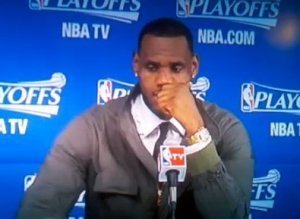
On Saturday night, after his teammate Dwayne Wade was asked a somewhat inane question, LeBron James muttered, “that’s retarded” under his breath.

Not that I’m a LeBron fan, but it was disappointing.

What was even worse for me was his defense of his actions Monday morning:

“I didn’t understand the question,” James said. “…it’s the same as me saying, ‘I don’t think that’s a great question’ or, ‘I think it’s a stupid question.’ …I don’t know why someone would even ask him that question.”

As Charlie Zegers at About.com points out, then according to LeBron, “retarded” and “stupid” are synonyms.

Right.

Good job, LeBron!

It really got me down.

But I didn’t stay down too long. By the end of the day, I actually felt kind of good. It wasn’t LeBron’s comment or his defense that I felt good about.  No, it was the across-the-board condemnation of both on sports radio here in Boston – from the morning shows into the evening hours, every sports radio talk show I tuned into, both on AM and FM, universally ridiculed LeBron for his use of the word.

I wasn’t sure what to expect from the radio show hosts, but suffice it to say, I was pleasantly surprised that both left and right leaning personalities were on the same page on this topic.

Now, I’m not particularly PC. I do lean left on most politically social issues, but I also feel that the far left (along with the far right) has hijacked both the political discussion and process that is supposed to serve you and me. That being said, I feel there are some words that should be rarely, if ever, uttered – retarded is one of them.

It is hurtful; it is mean; it is lazy.

Kevin Arnovitz at the ESPN Heat Index Blog wrote this:

I also don’t think it’s hypersensitive to ask people to be more precise with their language — not as a political imperative, but because it’s so easy to do. This is life’s ultimate value play: We refrain from stigmatizing groups of people with our speech at very little cost, and we reap the benefit of collective dignity and knowing we didn’t hurt anyone. How does this play out in the practical world?

If a reporter asks a silly or inappropriate question, call it silly or inappropriate.

There was a time when the public reaction would have been to laugh at or ignore LeBron’s comment.  I have come to realize that those that stand by and “let” hurtful things happen to others while they passively observe are just as guilty as those that perpetrate the hurt.  Needless to say, it still happens, but it was nice to see that some progress has been made.

I hope that LeBron figures it out.  Like it or not, he is a role model.


Bookmark and ShareWhy do you run?

Here I Go Again…

[tweetmeme source=”luau” only_single=false http://www.URL.com%5D

…and so it begins.

Today I ran 8 miles followed up by some strides. I followed my heart and ran happy.  The only real significance of the run is that it was the first scheduled run for this new training cycle. On Friday I officially signed up for the Around the Lake Marathon. Today I started the Pfitz 12/70 plan. The 12-week plan starts at about 55 miles per week and peaks at a little over 70.

So here I go again…

4 AM wake ups, predawn runs, long run Sundays. I’m looking forward to seeing if my legs can handle the new program. This will be uncharted territory for me in terms of mileage, but I think that it’s the logical next step.

Yes, here I go again…

Long runs, marathon-paced runs, tempo runs, VO2Max runs – my familiar morning friends.

Yes, here I go again…but fortunately for me, unlike David Coverdale, I may not be going “on my own”.  As you may or may not know, the Around the Lake Marathon is part of a greater 24 Hour Around the Lake Ultra Marathon. There is talk among the NERTS (the New England Running Tweeps) of forming a team to run the 24 hour ultramarathon as a relay.  They are still a few people short, so if you’re interested, let me know.  That relay team could/would serve as a pacer for the first 8 laps for yours truly! Talk about awesome!

In return, I’d crew for them the rest of the way.

Sounds like a party!

So here I go again…

It feel great to be running with purpose again, with a goal on the horizon.

Do you think David Coverdale was a marathon runner?

Bookmark and Share

Why do you run?

The Joy

[tweetmeme source=”luau” only_single=false http://www.URL.com%5D

With all the “what went wrong” and “what could I have done” and “what will I do” posts over the last two weeks, I was told in passing by my friend Brendan that I was analyzing my Boston Marathon race to death. The tone in his comment was not critical or even one of “hey, earth calling Luau” – it was simply matter of fact.

And he’s right.

Inadvertently, he reminded me that the running is not necessarily about the race or the analysis, but rather, it is about The Joy!

The benefits of the Runner’s High are well documented. So are the health benefits one gets from running; as are the psychological ones; and to a lesser degree, the intellectual ones.

What Brendan reminded me of is the joy of simply being active.  All of the benefits mentioned above come after a certain amount of time on your feet. To achieve them, you have to work – sometimes a little, sometimes a lot.

The Joy however is that feeling you get while you’re slipping on your shorts and then into your shoes, and then finally as you are stepping out the door.  That anticipation of movement, of sweat, of earned endorphins, of that feeling of “spentness”

I love that feeling – that sense of joy, that sense of knowing you are about to bring the pain and it is going to hurt so good.

I haven’t forgotten the Joy while I have been dissecting my 2011 Boston. In fact, the Joy has been, in part, what has kept me sane, allowing me to continue to have the desire to run despite the disappointment and analysis.

Well, after Brendan’s comment, the analysis is done, the disappointment is harnessed.

Yes, it is back to training; yes it’s back to numbers – The Around the Lake Marathon is less than 12 weeks away.  But this cycle is going to be about The Joy!

Bookmark and Share

Why do you run?

The Foundation

She is the foundation upon which our house has been transformed into a home.

She is the roots of the tree that give life to the leaves.

Because of her, Katie is wise beyond her years, Brooke continues to make real progress and I continue to evolve.

She is a fighter, a protector, a nurturer.

She is a teacher. She is a student.

She is a speaker. She is a listener.

She is thoughtful, sympathetic, empathetic.

She is beautiful and sexy, though she often forgets it.

She doesn’t need to wear make up…ever.

She is strong and weak at the same time.

She is a wife, a lover, a friend.

She is a tiger and a bear.

But first and foremost, she is Mama to my little girls.

Happy Mother’s Day, Jess!

The girls could not have designed a better mother for themselves!

Following My Heart

[tweetmeme source=”luau” only_single=false http://www.URL.com%5D

Yesterday I wrote about Discipline – how my lack of it at key times may have cost me my goal in my last marathon.

Our race day performances are, more times than not, a reflection of the training we have put in over the course of weeks and months.  My training cycle leading into Boston felt great.  My workouts were fast (for me).  Except for the recovery runs, they were all fast.  That isn’t a huge problem when you’re running tempo or VO2Max runs, but it is a problem when you are doing your medium-long and long runs.

There is a physiological purpose to the long, slow distance:

Pure endurance training stimulates [your ability to store glycogen and use fat for fuel] and increases the capillarization of your muscles…the primary type of training to stimulate these adaptations is runs of 90 minutes or longer…long runs are the bread and butter of  marathoners…the most beneficial intensity range for most of your long runs is 10 to 20 percent slower than your goal marathon race pace.  

-Advanced Marathoning by Pete Pfitzinger and Scott Douglas

My issue was that once I was out there on Sundays I would get sucked in by how good I felt.  Almost every time I was out on the road, I would realize early on that my splits were faster than the prescribed training.  My goal of a sub-3:15 marathon called for me to run the marathon at about a 7:24/mile pace.  According to Pfitzinger, I should have been running my long runs 10% – 20% slower than marathon pace.  That means I should have been running my long runs between 8:08 and 8:52 per mile pace.  It is at these speeds that the physiological changes occur to increase one’s endurance.  Looking back, my long run would start in the mid to low 8’s and ultimately end up in the mid to low 7’s.

Well, Luau, if you could run faster at those distances, isn’t that a good thing?

Here’s the thing – all those run simply proved was that I could run those distances (12 – 20 miles) at or near marathon pace.  They did not in fact do what the long run is designed to do, which is improve endurance.

So why didn’t you slow down?

That’s a damned good question.  Logically, that’s what I should have done.  I could see the splits on my watch.  I knew that I was running too fast.  But here’s the problem – I’m a mildly competitive person, not necessarily with others, but with myself.  I had a hard time slowing down.  Mentally I just couldn’t do it.

So what to do?

Obviously knowing my mile splits didn’t do it for me.  I felt good so I kept at the pace.  My legs didn’t feel like they were working too hard, and I was able to convince myself that if I felt good I could and should keep going.

I could fool my legs, I could fool my brain, but there is one part of the body I cannot fool – my heart.

One of the purest ways to determine how hard you are working is by listening to your heart.  The harder you work, the faster it beats.  It’s pretty simple.  When I trained under the Pfitzinger plans for both Smuttynose and Boston, I trained during the week solely based on time, or what I perceived my various levels (Recovery, General Aerobic, Long Run, Marathon Pace, Lactate Threshold and VO2Max) to be.  I determined my times based on past races.  The only problem is that some race results indicated that I could run a 3:07 marathon, while others indicated a 3:17.  10 minutes may not seem like a lot to a non-marathoner, but believe me, it is.

Guess which indicators I chose to believe?

As runners, we hear over and over again, train at the fitness level that you are at, NOT at the level you want to be.  Training where you are allows you to get better and improve; while training where you want to be, though exciting, can lead to undue injury and, possibly in my case, missing the point of certain runs all together.

So over the past week, I have dusted off the old heart monitor (I think it actually belongs to the wife), and decided I would let me heart lead my workouts.  Yes, I will literally allow my heart to dictate what the pace of the day (based on the prescribed workouts) will be.  So far, I have been pleasantly surprised to find that my heart rate remains relatively low when it comes to my Recovery and General Aerobic runs.  It may all be an indication that I was previously running too slow during the week and too fast over the weekends.

We shall see…stay tuned!

Now, if I could only get Garmin to send me the new Forerunner 610, I’d be all set!

Bookmark and Share

Why do you run?

Discipline

Discipline is the bridge between goals and accomplishments

[tweetmeme source=”luau” only_single=false http://www.URL.com%5D

As I continue to peel back the layers of what may have happened to me at Boston, something keeps nagging me. Looking back at my splits, I realize that early on I wasn’t on pace for a 3:15 marathon, or even a 3:10. Some of my splits, had I been able to maintain them would have brought me in between a 3:00 and 3:05 marathon.

That’s a problem.

I’m not a 3:00 marathoner. Not yet anyway.

***

In retrospect, there were signs of the coming power bonk* during my training.

Throughout the winter, I was disciplined about running on the days I was scheduled. During the week I would run exactly or very near to what was prescribed by the Pfitz 18/55 plan I was following. On Saturdays, I would also run at the distance and speed that I perceived to be required.

But then there were Sundays.

Ah, the Sunday long run. It is, without question, my favorite part of training for a marathon. Whether it happens on my treadmill in the basement in front of the TV or, preferably, outdoors where I can enjoy the scenery, it is a relaxing time. Yes, I push myself; yes, I finish tired; yes, it is not easy; but it is peaceful. I get my highest runners’ highs off of the long run.

But there was a problem. I could never just run at the pace dictated by my training schedule. I always pushed the pace to a speed that was out of the physiological training zone I was supposed to be working on. Long, SLOW runs have their purpose. They are important, and yet I always pushed the pace a little faster than prescribed, probably costing me some precious endurance.

That being said, I was still probably in good enough shape to achieve the 3:15 I had originally been after, but true to form, when it came to race day, I pushed the pace. In the closing days leading up to Boston, I let myself get sucked into the concept of running a 3:10. My discipline went out the window at mile marker 1 and, in the words of my friend MK, the 20 – 25 seconds per mile I gained probably caused a classic bonk – and when I say classic, I mean an All. Out. Bonk.

I have never bonked like that before (not even at Manchester – that was my quads). I never want to bonk like that again.

So this training cycle is going to be about discipline (how I go about it I will discuss in my next post). Don’t get me wrong, I will still run happy. I will still have fun while I’m running. BUT, on Sundays and on race day, I will also remember the classic line, “slow and steady wins the race”.

More importantly, I will remember on race day that I have a plan, that I have trained for the plan, that I need the plan. I will resist the urge to push the pace early, and hopefully keep enough in the tank so that instead of hanging on for the final 10K, I will actually be able to pick up speed and finish strong. This was the strategy at Smuttynose, and it worked until I hit a soft wall with a mile to go. At that point though I just needed to finish to get my BQ…and I did.

So if you see me out there on a Sunday running way faster than I should, feel free to yell at me to rein it in. I know there are going to be times over the next 12 weeks that I just let the horses fly (or the schedule calls for a marathon-paced run), but I’ve got to remember, if I want to be disciplined on race day, I’ve got to do it in practice as well.

*In endurance sports, particularly cycling and running, hitting the wall or the bonk describes a condition caused by the depletion of glycogen stores in the liver and muscles, which manifests itself by precipitous fatigue and loss of energy.

Why do you run?

The Dark Side

“Fear is the path to the dark side. Fear leads to anger. Anger leads to hate. Hate leads to suffering.”

-Yoda

“You have controlled your fear. Now, release your anger. Only your hatred can destroy me.”

“If you only knew the power of the Dark Side.”

-Darth Vader


[tweetmeme source=”luau” only_single=false http://www.URL.com%5D

Darth Vader, once the biggest bad-ass in the Universe, makes a compelling argument.  When we are angry, when we hate, we can harness a tremendous amount of strength and power.  Governments have been overthrown, wars have been won on the power of anger and hate.  But at what price?  I could go on endlessly on the topic, but this is a running blog, not a philosophy or history blog.

In the aftermath of Boston 2011, I found myself going through different stages.  Much like the path to the Dark Side, I first found myself fearing that I would never want to run a marathon again.  I then got angry that I let my game plan go out the window from the very start.  That was followed by a generic hateful feeling that ultimately led to internal suffering.  The anger part though has not totally faded away yet.  There has been a part of me that has been afraid that I will spend the next 13 weeks preparing for the Run Around the Lake by running angry.

Now, running angry can be productive.  It can get you over the hump, push you through the wall,get your ass out of bed -sometimes, to quote the movie Win-Win (which I highly recommend), you have to do whatever the f*@# it takes!

"whatever the f*@# it takes!"

…but, again, at what price?

If I train angry and run angry and accomplish my goal, what part of me will I have sacrificed to do so?  Will that anger instantly turn to joy if I run a sub-3:15?  Would I even feel joy as I cross the finish line with a sub-3:15?

Running is physically exhausting, with the return you get being a general sense of well-being for several hours after you run.  But anger is emotionally exhausting, negating that feel-good post-run feeling.

I feel like a young Luke Skywalker – new to the game, in possession of a mild amount of skill, with enough knowledge to think that I have enough knowledge, which of course, simply means I have enough knowledge to get myself into trouble.  As my dear friend MK pointed out in the comments of Complement, I’ve only been at this running thing for a little over two years – I am a beginner, a neophyte, a padawan.  I need patience tempered with the understanding that my endurance will come.

And yet, I hear the call of the Dark Side.  The taking running too seriously side.  The running angry side.  The running with hate side.  The running MTV-Generation Style side.

Doubtless, there will be days when I run with anger, but I hope I can follow the example of my friend Michelle, who preaches the concept of Running Happy.  I’ll get there, eventually.  I have to believe that.

To a large degree it’s just a matter of miles invested.  As long as I remember that, remember that each joyful step I take is one more step toward achieving my goal, I’m pretty sure I’ll be all right.

***

On Sunday I strapped on the old heart monitor and drove out to face those Newton Hills that shut me down just two weeks ago.  It was my first time running on them since the Boston Marathon.  My plan was to keep the heart rate low (as per my running schedule).  The run ended up being much faster than I anticipated, with my legs staying fresh, my lungs hardly having to work and my heart taking it easy.  It made me realize that I was not foolish to think that I could hit 3:10 at Boston, that sometimes, bad things just happen (whether by self-infliction or other means – based on MK’s comment, I may have simply gone out too hard).  April 18th just wasn’t my day.

July 29th will be…and I will do it with a smile on my face.

Bookmark and Share

Why do you run?

If Only…

[tweetmeme source=”luau” only_single=false http://www.URL.com%5D

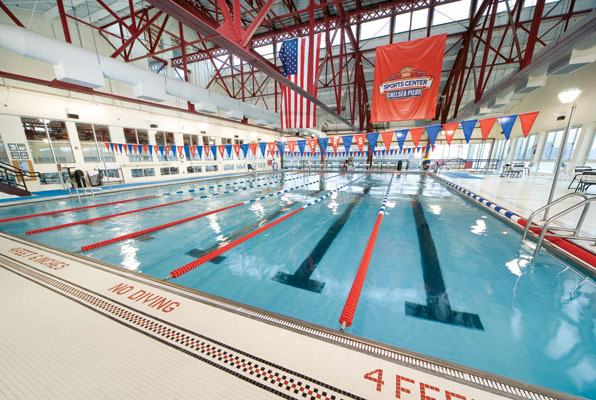
As I slipped into the pool this morning to try to implement my new effort to incorporate a complement to my running, I was momentarily distracted by the cheery singing of “ring around the rosy”. I looked up to see a group swim lesson going on with parents and toddlers. I smiled at the joy on the parents faces and the playful laughs of the little ones.

And then I cried a little.

As we come to the end of Autism Awareness Month, I can’t help but wonder, how much further along would Brooke be had I just been more aware when she was that age. Watching those parents and their children brought me back to swim lessons with Brooke. Swims lessons that were fraught with anxiety, screaming and crying. There was no joy, there were no playful laughs.

It was the beginning of an 18 month stretch where Brooke became more and more difficult to interact with.

We’ve come a long way since then. Her progress has been tremendous. But there is still a long, long way to go.

And moments like the one this morning as I slipped into the pool are tough reminders that maybe, just maybe, life would be different right now had I been more aware.

If only I had been more aware.

Had we given Brooke the therapies she needed at a much younger age, maybe her autism would not be as severe. Maybe her social interactions would not be as difficult.

This month is important. This month can save lives. Awareness can alter the course of personal history.

Please, PLEASE, don’t let Autism Awareness end with the turning of the calendar.

You just might ease the life-path of a little girl or boy and save the collective life of a family.

Bookmark and Share

Why do you run?

Complement

20110428-114814.jpg

com·ple·ment/ˈkämpləmənt/
Noun:A thing that completes or brings to perfection.
Verb:Add to (something) in a way that enhances or improves it; make perfect.

***

[tweetmeme source=”luau” only_single=false http://www.URL.com%5D

It’s time to complement – not to be confused with compliment.

No, though I’m sure I could write 1000’s of words complimenting all of you, today the topic is complement.

***

With every marathon that I’ve run, I have tried to follow a plan of some sort. For Manchester in 2009 it was the Runners’ World plan for Intermediate Runners. For Providence, and consequently Boston, last year (Spring 2010), I went with lots of long, slow, miles. For Smuttynose & New York (Fall of 2010) and Boston this year I followed my running bible, Advanced Marathoning.

In retrospect, I now believe I missed a very important part of the training process in each of these training cycles.

Yes, I put in the miles – man, did I put in the miles.

I ran fast.

I ran slow.

I ran hills.

I ran flats.

I.

Ran.

A lot!

See a “running” theme here? Despite mixing up the types of runs I was doing, I essentially did nothing other than run. Oh, I touched on doing push ups for a couple of weeks, planks for even fewer, but for the most part, every workout was about the run, run, run.

***

Now, my ego is still hurting a little from my collapse at Boston this year. Yes, I did manage to make Lemonade out of Lemons. I enjoyed myself immensely. But honestly, it is not the way I would have chosen to run this, or any marathon.

I’m not saying that my asthmatic episode was caused by a lack of core strength or lack of flexibility. I’m not looking for excuses. But I do know this – Pfitz’ 12/55 program call for 4 – 5 day of running per week. On the off days, the plan calls for either rest or cross-training. During the past two training cycles I have almost always chosen rest, and by “almost always” I mean always – an older guy like me needs recovery time, right?

Looking back I can’t help but wonder – would a stronger core have helped me expend less energy over the first 17 miles of Boston? would that conserved energy have translated into my breakdown happening much later in the race? would I have arrived at mile 17 just that much sooner? would increased flexibility have prevented the eventual tightening of my legs and shoulders after I went into survival mode? would I have been able to stride it out on the Newton Hills?

I don’t know the answer to any of these questions.  In fact, I’m starting to wonder if the episode was stress and anxiety induced.

However, I do know that every edge helps.

I went into Boston this year thinking that my legs were ready to run a 3:10. I still believe that they are, but I wonder if there are other parts of my running system that need a little extra work?

With that thought in mind, the next training cycle is going to be a little different from previous ones. I will still take rest days to be sure, but they will be significantly fewer and farther between.

There will be more stretching.

There will be more consistent core work.

There will be regular cross-training.

I’ve got 2 1/2 weeks to adapt to this new routine if I’m gonna run the marathon portion of the 24 Hours Around the Lake Race in late July. Hopefully, these complements will take my running up a notch and eventually take me to my goal.

…and then we can talk about compliments.

Bookmark and Share

Why do you run?